
#85 The Globant Case $GLOB
Is it still a tech disruptor, or just a very expensive staffing agency with nice offices? How a Latin American dream company went global — and why the future suddenly looks less obvious.

I am introducing a new series of articles focused on individual companies that capture my interest as compelling case studies, rather than as straightforward investment opportunities. These pieces will adopt a format inspired by HBS cases, presenting factual details in a neutral manner to encourage critical thinking and discussion in the comments. The goal is to dissect strategic decisions, market dynamics, and operational challenges without advocating for or against any investment thesis—simply to explore what makes these businesses noteworthy in their contexts.
Globant serves as the inaugural subject, a company I find particularly fascinating for its trajectory from an Argentine startup to a global digital services leader, only to encounter a precipitous decline amid broader industry headwinds. What began as a meteoric rise—revenues multiplying over 15 times since its 2014 IPO—has given way to a stark reversal, with its stock plummeting approximately 74% year-to-date. This "falling knife" phenomenon is not isolated; the IT services sector has endured widespread erosion, evidenced by similar YTD declines in peers such as Endava (-68%), EPAM Systems (-33%), Accenture (-31%), and Nagarro (-37%). Ironically, a field once celebrated for its innovative agility and explosive growths pre and post COVID, now grapples with the very technologies, like generative AI, that promised to propel it forward but instead amplify competitive pressures and margin strains.
I invite you to weigh in below with your thoughts.
Welcome to Edelweiss Capital Research! If you are new here, join us to receive investment analyses, economic pills, and investing frameworks by subscribing below:

🚀 New Project
Together with Leandro @Invesquotes (Best Anchor Stock) we’ve launched a new podcast.

Each week we’ll discuss companies and industries from a quality investing perspective, with a fresh and (hopefully) entertaining style. This is an example of our #0 Pilot Episode.
🎙️ New episodes every Tuesday at 18h. For now, in Spanish only.
Subscribe/follow if you like it and share with anyone who might be interested.
The Globant Case GLOB 0.00%↑
1. Introduction: Setting the Stage
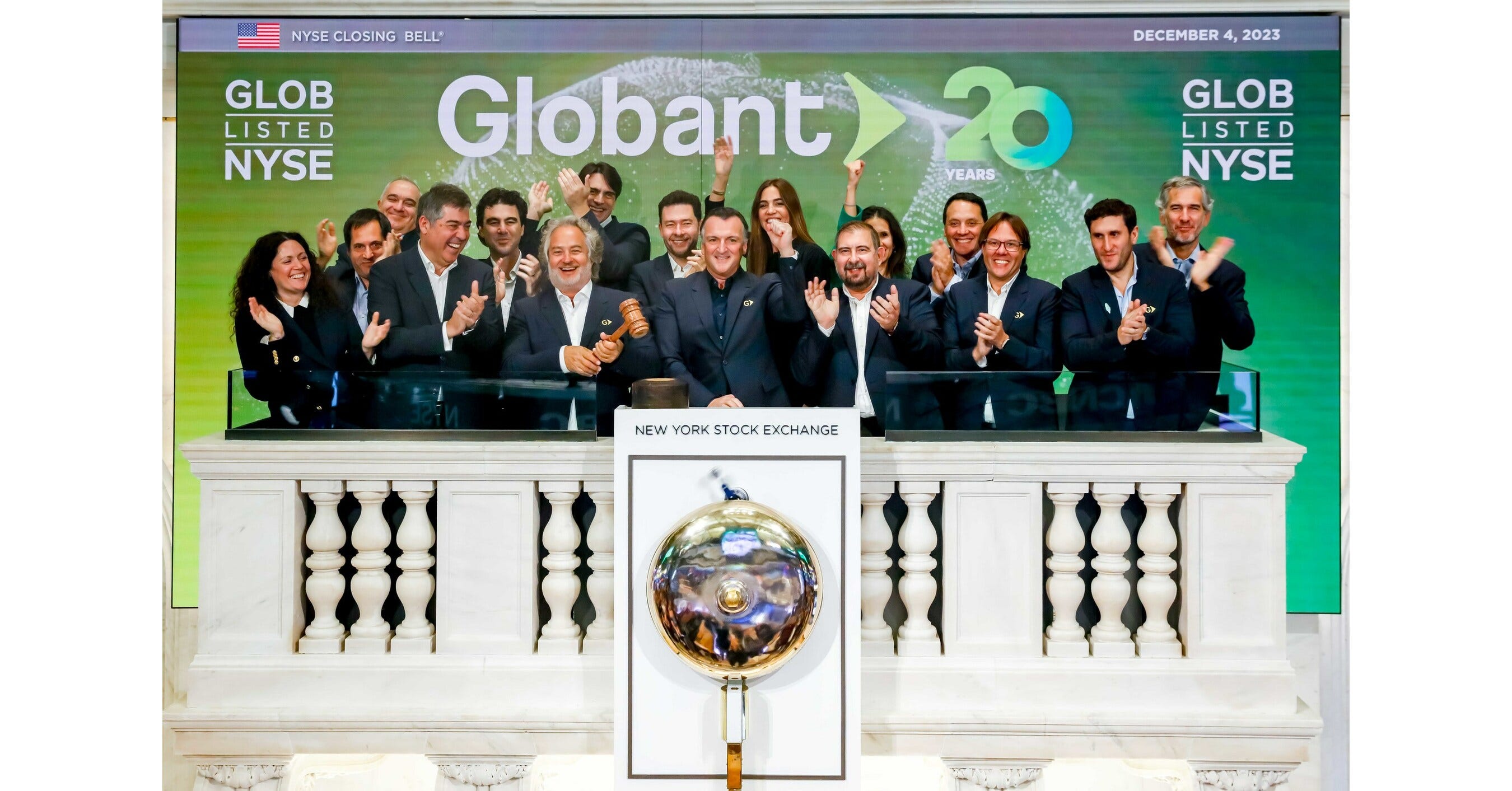
Globant stands as a symbol of Latin America's ascent in the global tech landscape, evolving from a modest startup in a crisis-stricken Argentina to a multinational player in digital services. Founded in 2003 by four friends amid the country's economic collapse, the company began with a vision sketched on a beer-soaked napkin: to harness Latin American talent for world-class software development. By 2014, Globant had achieved a landmark NYSE IPO as the first Latin American software firm to do so, marking its transition from regional underdog to international contender.
The company grew fast. By 2022, they were making $1.78 billion, which is like 15 times more than when they went public, and growing 40% YoY. They worked with big names—Google, Electronic Arts, Santander—helping them with digital projects, you know, transforming how they work online. Investors loved Globant because it was different, innovative, and they paid a lot for its shares.
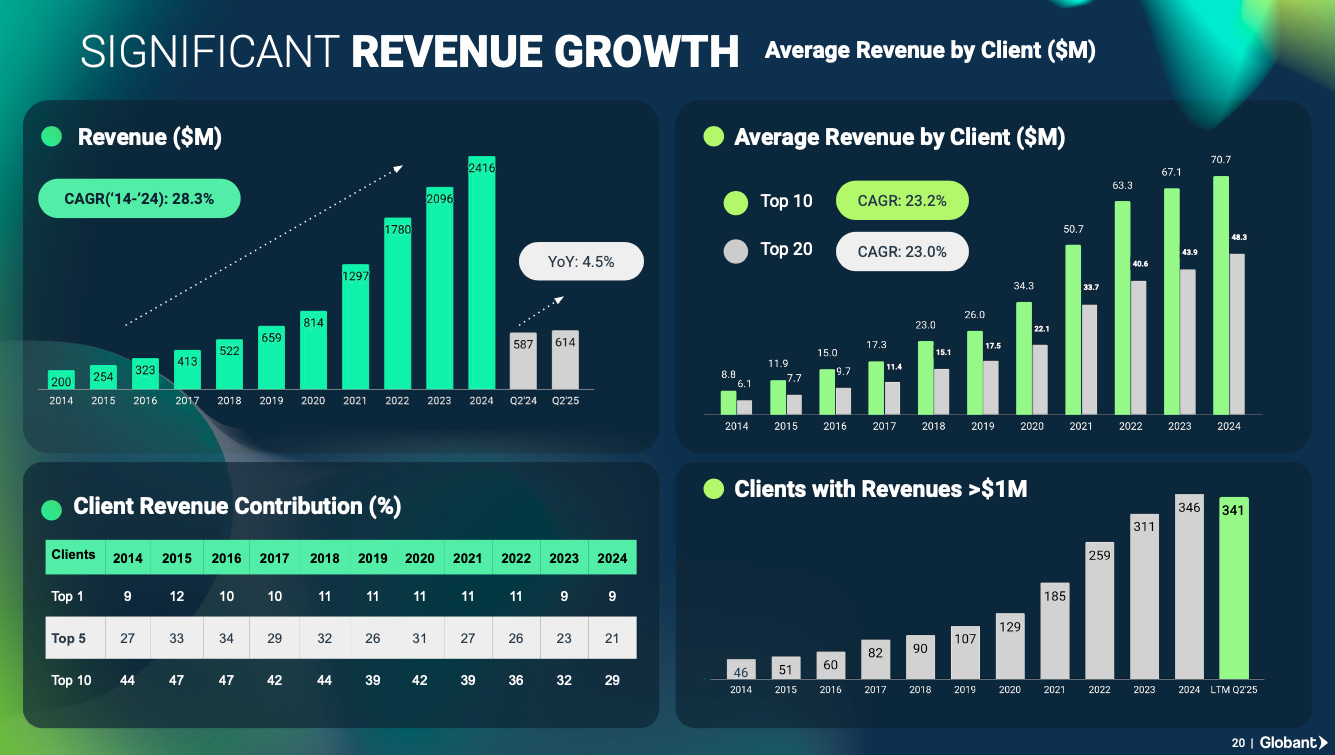
But now, in 2025, things are not so shiny anymore. The last numbers show growth is slowing down. In the second quarter, they only grew 4.5% and expect early any growth for the full year. The tech world is changing. The economy is tough, and the need for IT services isn’t exploding like before. Also, new stuff like generative AI is coming in. It’s exciting because it can make work faster, but it’s also a problem—it might mean less need for human coders, and that could hurt companies like Globant.
Other companies, like EPAM, Endava, or big ones like Accenture and TCS, are also jumping into AI, so Globant’s special edge is getting smaller. It’s like everyone is running the same race now. And then, you see these videos online—employees showing off Globant’s fancy offices, with rooftop gardens, wellness rooms, cool spaces to work together. They went viral, people loved them. It felt like the good times, like when Meta and Google had those crazy offices in 2021.

 Tiktok failed to load.
Enable 3rd party cookies or use another browser
But now, with growth slowing and costs going up (their ADJUSTED operating margin is still 15%, 8% if we take GAAP), people are asking: are these offices a good thing, or just a sign of spending too much when times were easy?
So, Globant is at a tricky point. Can it stay special, a leader in tech, or is it just a fancy staffing company that could lose its edge? Will AI help them, with tools like their Augmented Coding platform, or will it make things harder by cutting demand for programmers and pushing prices down? It’s a big question for a company that started with a dream on a napkin.
2. Founding Story: Argentine Roots Amid Chaos
Globant’s story starts in a tough moment for Argentina, back in the early 2000s. The country was falling apart—economic crisis, the peso crashing, people in the streets, everything a mess. In 2002, four friends—Martín Migoya, Guibert Englebienne, Martín Umaran, and Néstor Nocetti—met in a bar in Buenos Aires. Over beers, they wrote their big idea on a napkin: create a world-class tech company from Latin America, making software for clients all over the globe using cheap labour, but IT savvy, from LATAM. At that time, Argentina wasn’t a place anyone thought of for tech. India was the big name in outsourcing, but Migoya saw something special in local talent. “We wanted to show the world how good Latin Americans can be,” he said later. It was a bold move, like saying, “We’re not giving up, no matter how bad things are.”
In 2003, they started Globant. The name? Just a mix of available “.com” names ending in “-nt” to get a website fast. They set up in a tiny 30-square-meter office in La Plata, starting with just four people, then quickly growing to ten. Their first big client was lastminute.com, a UK travel website. From the beginning, they didn’t want to stay small or local. They traveled to the U.S. and Europe, pitching to big companies, saying, “We’re from Argentina, but we can do this.” It worked. They got EMC² as their first U.S. client, and then, in 2006, Google. That was huge. Working with Google made people notice. They called Globant “Silicon Valley’s best-kept secret.” It opened doors to more big clients.
Argentina shaped Globant in a special way. Instead of putting everything in Buenos Aires, they spread out. By 2006, they opened a development center in Tandil, a small city 300 kilometers away. Over time, they grew to nine cities in Argentina—Córdoba, Mendoza, others—giving engineers in smaller places a chance to work on global projects without moving to the capital or leaving the country. This was new. In Argentina, talented people often left for jobs abroad, but Globant said, “Stay here, work with us, do big things.” It was about pride, about showing talent is everywhere, not just in big cities.
Even with these roots, Globant always looked to the world. In 2004, just a year after starting, they opened an office in the UK. By 2007, they were in Palo Alto, California, to be close to clients like Google. In 2005, MIT wrote a case study about them, calling it “Leading the IT Revolution in Latin America.” That same year, they were named Endeavor Entrepreneurs, a sign they were going places. These things gave them respect, showing a company from Argentina could compete globally.
By the end of their first ten years, Globant had about 1,000 people. They started growing outside Argentina, buying companies like Accendra and Openware in 2008 to work in Chile and Colombia. They got money from U.S. investors, Riverwood Capital and FTV Capital, to grow faster. They moved into mobile apps with the 2011 Nextive buy and entered Brazil with TerraForum in 2012. They even did something fun—developed software in Antarctica in 2012, just to show they could go anywhere.
Globant’s Argentine spirit made its culture different. The founders were young, they didn’t like stiff rules or boring companies. They wanted a place that felt alive, creative, optimistic. They made values like Think Big, Be Innovative, Aim for Excellence, Work as a Team, Have Fun, and Be Kind. “Have Fun” was very Argentine, a way to keep things light, not too serious. “Be Kind” showed they cared about people. They built a tool called StarMeUp to keep employees connected, which later became a product they sold to other companies. In the end, this was/is a people business, and they tried to make people engage. Not an easy task in such companies.
In short, Globant’s early years were about dreaming big in a tough time. They went after U.S. and European clients from day one, spread work to smaller cities in Argentina, and built a culture mixing Latin energy with global goals. By 2014, when they became the first Latin American software company to go public on the NYSE, they proved an Argentine startup could shine on the world stage. The challenge after was to keep that spirit while growing huge.
3. Business Model and Expansion: Studios, Pods, and Scale
As Globant got bigger, they needed a way to stay fast and flexible. Around 2009, when they had a few hundred people, they created the “Studio” model. Instead of organizing by country or client, they made small units, each focused on a specific tech or industry, like a little expert team. The idea was to feel like a small, specialized company even as they grew. It kept things from getting slow and heavy, like big IT companies sometimes are.
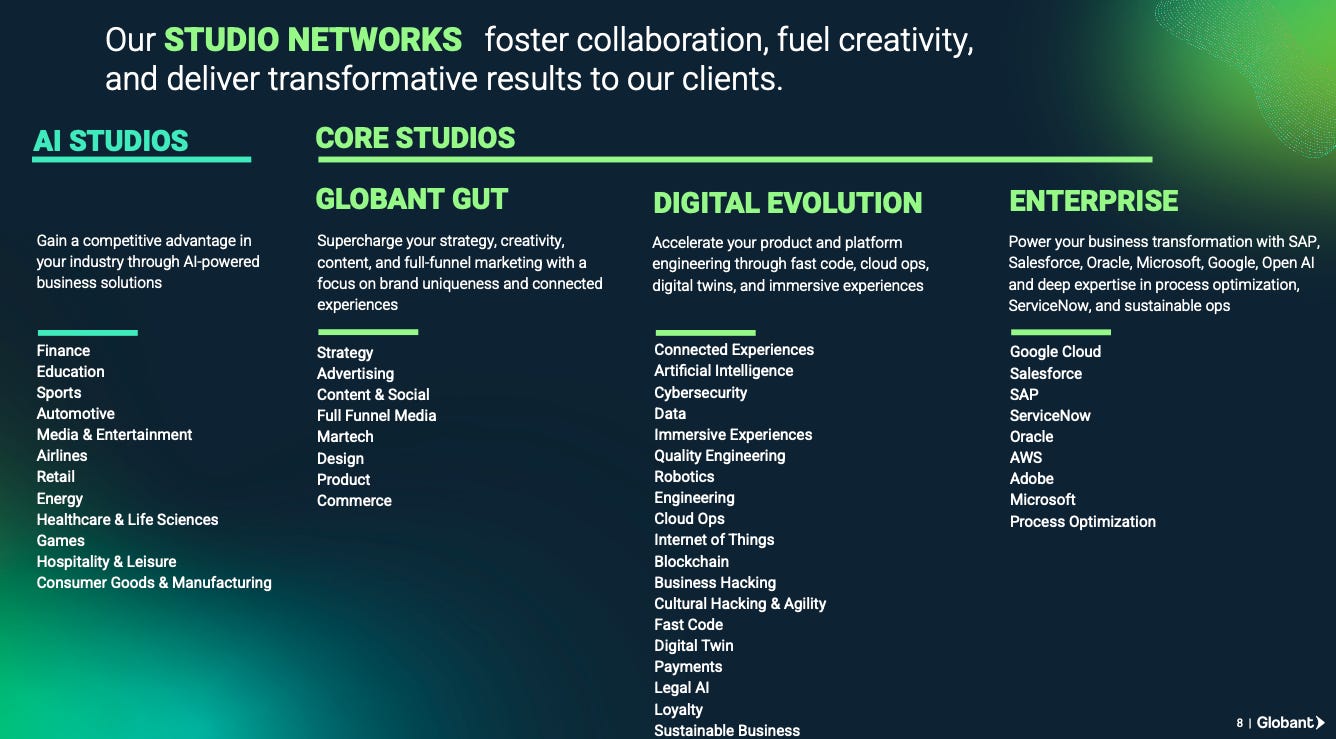
Each Studio is like its own group, handling everything from ideas to final products. They started with Studios for things like mobile apps, gaming, or finance. This let teams get really good at their area but still work together on big projects. By 2023, they had 38 Studios in four groups, or “Networks.” The Digital Studio Network does software with tools like AI, Blockchain, or CloudOps. The Enterprise Studio Network works with platforms like Salesforce or Microsoft to help big companies run better. The Globant GUT Creative Network, from a partnership with GUT, an ad agency that won 21 Cannes Lions in 2024, has Studios for Advertising, Marketing, or Design—mixing tech with creativity, which is rare for an IT company. The AI Reinvention Network focuses on AI solutions for industries like airlines or media.
Then there are “Pods,” small teams of designers and engineers from different Studios, working together for one client’s goal. They’re fast, working closely with clients, like a startup inside the company. Globant calls their structure an “inverted org chart,” where developers have more power than bosses. It’s different from old-school companies, but as Globant grew through buying other firms, some wonder if this can last.
4. Service Lines and Tech Positioning: Riding the Waves
Globant’s mission is all about “reinvention,” and you see it in the wide range of services they offer to different industries. They started with just a few areas, like travel and media, but now they work with finance, entertainment, hospitality, healthcare, retail, consumer goods, gaming, and sports. They’ve grown from a small focus to a big client base, handling everything from packaged goods to video games. Each industry gets special attention through their Reinvention Studios, now called AI Studios, so they can solve problems specific to each field.
In finance, Globant helps banks, fintechs, and insurance companies with things like digital banking platforms, mobile payments, blockchain, and AI analytics. Their Finance AI Studio is a big deal, led by someone at CEO level, showing how important it is. They got better at this by buying companies like BlueCap in 2020, which does banking strategy, and Navint, which focuses on finance processes. These let them do projects like updating old banking systems or launching new digital banks. It’s a mix of tech skills and knowing the industry well, which makes them stand out.
Media and entertainment is still a strong area for them, going back to early work with Electronic Arts. They’ve got a long-term deal with FIFA to improve the FIFA+ platform for the World Cup, creating streaming services and cool fan experiences for millions during big events. The Media & Entertainment AI Studio, with its own CEO and CTO, handles everything from planning to building these platforms.
Travel and hospitality was one of their first areas, with clients like lastminute.com and Sabre. They have special units for this—the Airlines AI Studio works on booking systems, mobile check-in apps, and data analytics for airlines, while the Hospitality & Leisure Studio makes apps for hotels and theme parks to improve guest experiences. They understand things like loyalty programs and travel logistics, which regular developers often don’t get. The Airlines AI Studio now uses AI for things like predicting when planes need maintenance or offering personalized travel deals.
Gaming is another area where they have shined. Their Gaming Studio, now mixed with EdTech, works on game development, multi-platform experiences, and VR/AR projects. Early work with Google probably helped them get good at graphics, and now they’re into Metaverse stuff, which we’ll talk about later. These focused efforts show how Globant builds special skills within their bigger service setup.
On the tech side, they offer what you’d expect from a digital consultancy: designing user experiences, building mobile and web apps, moving to the cloud, data analytics, AI, setting up enterprise systems like ERP or CRM, and cybersecurity. But instead of calling these generic services, they organize them into Studios. For example, UI/UX and product design go to the Design and Product Studios, while data and AI are in the Data Science/AI Studio. Quality checks and testing are handled by the Quality Engineering Studio. This setup helps clients find exactly the team they need.
Globant often works with big companies on long-term digital transformation projects, acting like a partner, not just coders. For example, they helped Rockwell Automation update their software and interfaces. They also work closely with cloud providers like AWS, Google Cloud, and Azure, with certifications like AWS Advanced Consulting Partner and Salesforce Platinum Partner. This helps them deliver big projects and get referrals.
Their services fit different client needs: Digital Product Development makes apps and websites; Data & AI Solutions builds analytics dashboards and AI features like recommendation systems; Cloud & DevOps Services moves old systems to the cloud and automates infrastructure; Enterprise Platforms Implementation customizes tools like Salesforce and SAP; Digital Marketing and Content, through the Globant GUT network, handles campaigns; Process Automation and Augmented Operations use AI to make work more efficient; and Consulting and Strategy, with help from acquisitions like Bridge and Grupo Assa, plans digital strategies.
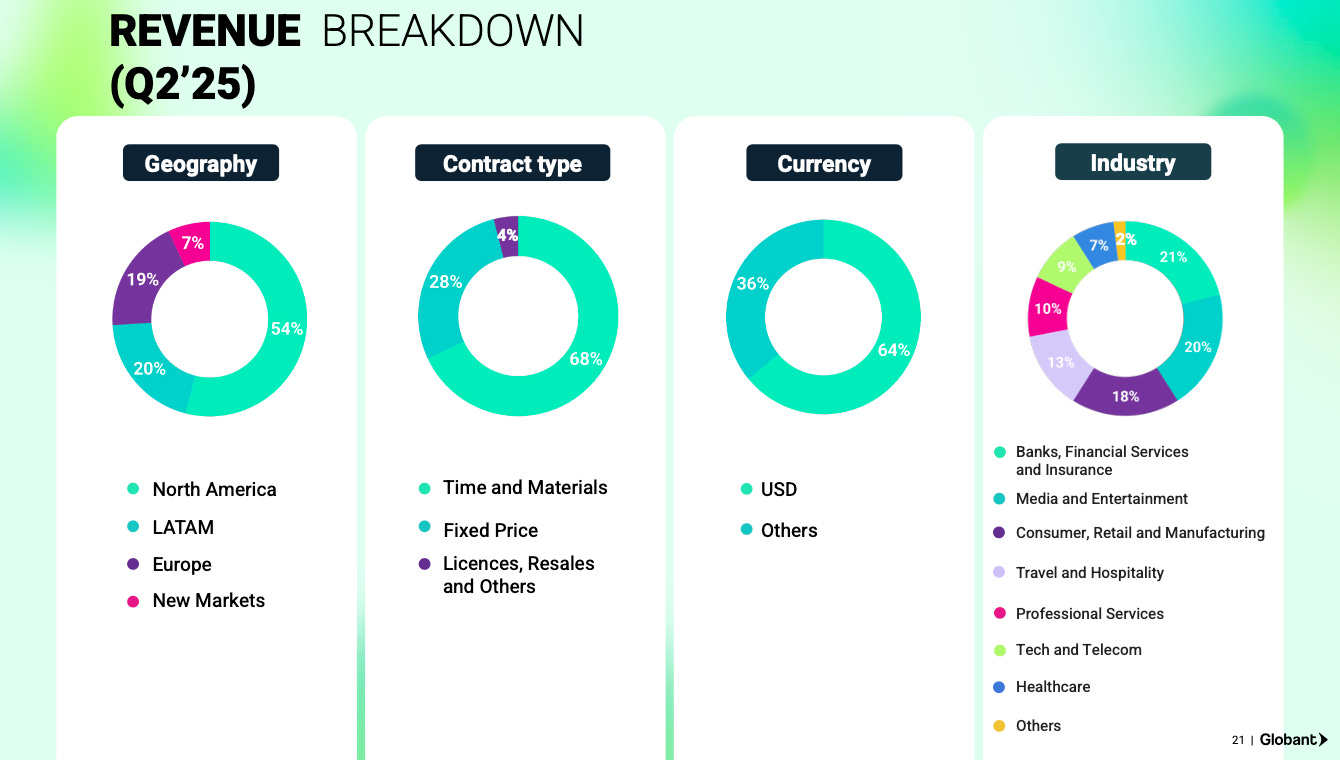
This variety has kept them strong. In 2022, no single industry was more than 10.8% of their revenue, with the top 10 clients making up 34%. By 2025, this mix helps them handle slowdowns in some areas, like tech startups, because growth in finance or healthcare balances it out. Unlike old-school IT outsourcing focused on cheap maintenance, Globant goes for “new build” innovation—creating customer-focused solutions and rethinking operations with cutting-edge tech. This has driven their growth and made them seem premium, but now they need to stay relevant as the industry changes.
5. Current Situation and Challenges: The Halt and AI Dilemma
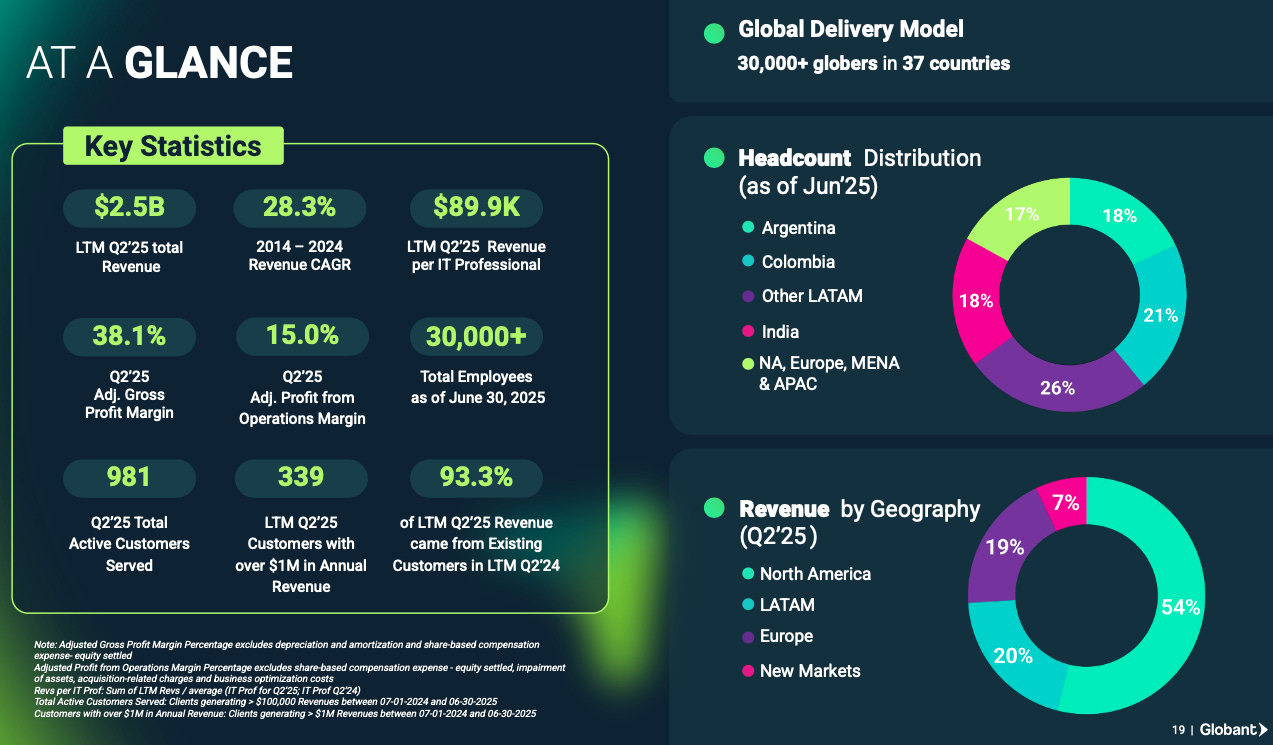
By mid-2025, Globant’s fast growth has hit a wall, like the rest of the IT services world. Their second-quarter revenue was $614.2 million, up just 4.5% from last year—nothing like the huge jumps they used to see. Growth from one quarter to the next was only 0.5% and the expectations for the rest of the year are even worse. This slowdown comes from economic problems, clients spending less on digital projects, and the big post-pandemic transformation boom fading. Over the last year, they made about $2.5 billion, but they’re cautious about the future.
The competition is getting harder. Companies like EPAM, Endava, and Nagarro are doing similar things, with agile, tech-focused approaches. Big players like Accenture, Cognizant, Infosys, and TCS are pouring money into AI and digital skills, catching up to Globant’s lead. This makes people wonder: is Globant really a unique innovator, or just a fancy staffing company that could lose its edge as tools become standard? With over 30,000 employees, it’s also hard to keep their fun, innovative culture alive while managing a global company.
Those fancy offices, shown off in employee videos with cool spaces, wellness areas, and perks like Meta and Google had in 2021, used to help attract talent. Now, they look like expensive extras, and Globant is tightening its belt, which might hurt the culture that made them special.
AI is a big deal—both a chance and a risk. CEO Martín Migoya compares the AI boom to smartphones, and tools like Augoor help developers code faster. In 2025, they launched AI Pods, a subscription model mixing human experts with AI agents, charging by usage to improve efficiency and bring steady income. IDC calls Globant a leader in AI services, expecting big client projects with AI like large language models. But the truth is that the revenues for these services are practically insignificant.
AI could also hurt. It might reduce the need for engineers on simple tasks, shrinking project demand and pushing prices down in a tough market. Margins are squeezed by investments in AI tech and retraining workers, while clients want cheaper services. If AI makes coding and testing common, Globant’s big workforce could become a problem, forcing cuts that go against their “Be Kind” value.
6. What Lies Ahead? My view.
Globant’s path from that napkin sketch in Argentina’s tough times to a company making $2.5 billion is a great story, but now the industry changes and AI coming in strong bring real challenges, ones that are hard to figure out completely. You never know if this is just a temporary thing because the whole sector is doing bad, or if the story for these kinds of businesses is really broken for good.
Right now, I think things got worse because the clients just don’t know what to build with AI, what can really give them a good return on investment. We’re still early in putting AI into the real world, and that creates doubts and freezes budgets. Plus, a lot of IT spending is going to cloud services, so other projects get stopped. Budgets aren’t endless, especially now with the general economic uncertainty.
Part of the damage comes from valuations that made no sense after the 2021 boom. It became fashionable to say these growth companies should be valued at 30-40 times EBITDA… something totally unreal, given the mediocre quality of these businesses in general, with low physical capital but a lot of working capital (and even more as they grow) that leaves very little free cash. Well, Globant reached 79 times EBITDA… a real bubble… now it’s at 7 times.
The truth is, adopting AI will bring a huge amount of work for companies. For a company to adopt AI is a tremendous job. It’s not just a user connecting to ChatGPT; it’s integrating large language models and whatever comes next into processes, using internal data to get productivity improvements. That’s a massive task, and on a global level…
But this productivity improvement affects them too. They can do more with less. And these companies have grown based on man-hours. What are going to be the man-hours volumes in the future with the anticipated AI productivity enhancements? Will it offset increasing demand? I have no answer to this, and I have arguments for both views.
When an industry so heavy on human capital dries up, a lot of second-order things happen. People don’t get promotions. Morale in the teams gets worse. No bonuses. They start accepting lower margins in tenders to fill capacity and not have people idle. Firing people costs money. Hiring new ones later costs even more. It turns into a bad cycle that feeds itself. In the end, the success of investing in these companies was mostly about excellent execution (maybe Accenture is a bit different with more branding, but for the rest, not much.)
In the end, I always like to think about who keeps the value from a new innovation or service. If AI makes these services more efficient, who benefits? Probably the final clients, the companies hiring the services. And I think this because of the tremendous competition and little differentiation in the sector.
To add to Globant’s case, in a negative way, is their ridiculous obsession with incredibly high stock-based compensation. $82 million in the last 12 months, over an EBITDA of $350 million. While acceptable for cash-strapped startups aiming to align early employees with company success through equity incentives, such levels seem excessive for a mature firm like Globant, now over two decades old and generating billions in revenue.
Plus, SBC in companies with relatively commodity services and always tight margins from competition is just ridiculous. High SBC directly dilutes shareholders by increasing share count and eroding earnings per share, effectively transferring value from investors to employees without corresponding cash outlays. Wall Street's practice of excluding SBC from adjusted metrics—focusing on non-IFRS figures that paint a rosier profitability picture—further muddles the issue, as these non-GAAP numbers fail to reflect the true economic cost to owners. In today's environment of slowed growth and investor scrutiny, this approach feels increasingly untenable, prioritizing short-term optics over long-term shareholder alignment.
To finish, maybe Globant will keep growing in the future. In fact, I think in the short to medium term, it’s more than likely, and the valuation will bounce back once we see a recovery. But while I believe things will pick up in the medium term, I worry more about the quality of the business for the whole industry and the real long-term risks. Now for you.
Questions to discuss
Can AI boost Globant’s model or hurt its core? AI Pods could make work more efficient, but they might cut demand for human engineers, central to their Studio-Pod setup. Can Globant keep its high prices, or will clients demand cheaper rates as AI makes services more common?
Is this slowdown just temporary industry pain, or is the whole model for companies like Globant broken? If clients are freezing budgets because they don’t see clear ROI from AI yet, could things turn around once adoption picks up, or is the competition too fierce to recover the old growth?
Who really wins from AI efficiency in this sector? If AI lets services be done faster and cheaper, does the value go to clients squeezing prices, or can Globant capture it through tools like Augoor? Or will low differentiation mean everyone loses margins in the end?
Can Globant sustain its culture at this size? With 30,000+ people, their fun and kind spirit might fade with no promotions, low morale, and cost cuts. Will trimming perks like those fancy offices hurt talent attraction, or is execution enough to keep them going?
Is high stock-based compensation still justifiable? Spending $50 million a year on SBC dilutes shareholders in a tight-margin industry. It made sense for startups, but for a big company like Globant, does it misalign with investors, especially when Wall Street hides it in adjusted profits? Should they cut it to focus on real shareholder value?
How will competitors change Globant’s spot? As big players like Accenture and TCS push AI, and smaller ones like EPAM copy the agile style, can Globant’s Latin American roots and speed keep it ahead, or will it get squeezed in a crowded market?
What strategic move could save Globant long-term? Beyond AI, could focusing on niches like gaming or Metaverse, or growing proprietary tools, help? Or might emphasizing nearshore talent give a cost edge? But if the industry quality is mediocre, is any pivot enough against global risks?
Feel free to share your thoughts in the comments, agreeing or disagreeing with these ideas, or adding your own views on the industry.
If you enjoyed this piece, please give it a like and share!
Thanks for reading Edelweiss Capital Research! Subscribe for free to receive new posts and support our work.
If you want to stay in touch with more frequent economic/investing-related content, give us a follow on Twitter @Edelweiss_Cap. We are happy to receive suggestions on how we can improve our work.
Great article, thank so much!
"This is my best performing stock. I’m not sure when the hype and the run on this one will come to an end. I think I’ll take some profits soon :-P